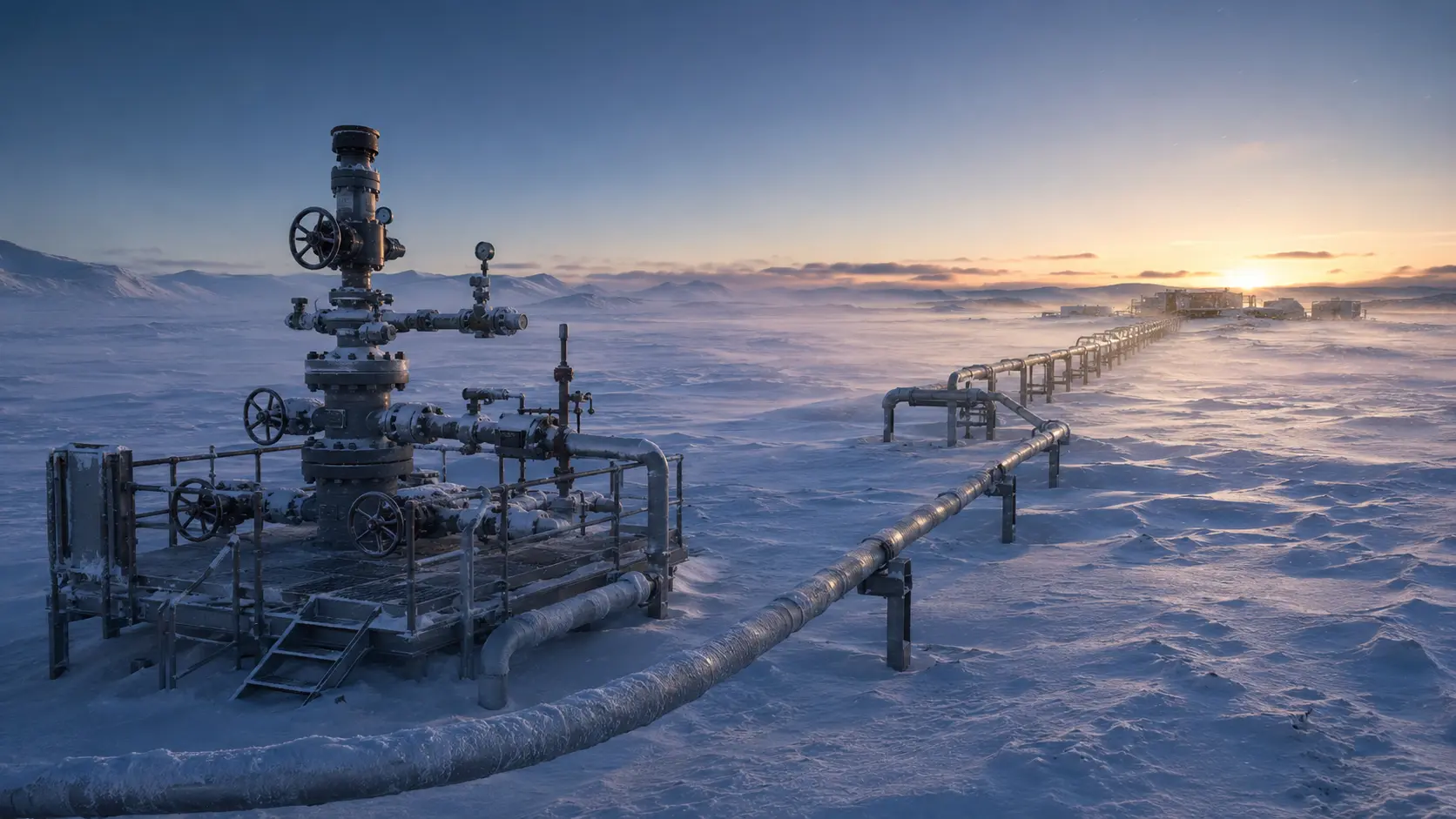
01Source
Stranded gas becomes the energy source.
Remote natural gas can provide long-duration energy at production cost, directly where the resource already exists.
- System signal
- Remote reserves
- Design effect
- No grid dependency

Business model
A vertically integrated system converting stranded natural gas into scalable computing infrastructure.
The system · Scroll to explore
Move through one infrastructure layer at a time. The system remains continuous, while each stage gets the space to be understood.
Remote natural gas can provide long-duration energy at production cost, directly where the resource already exists.
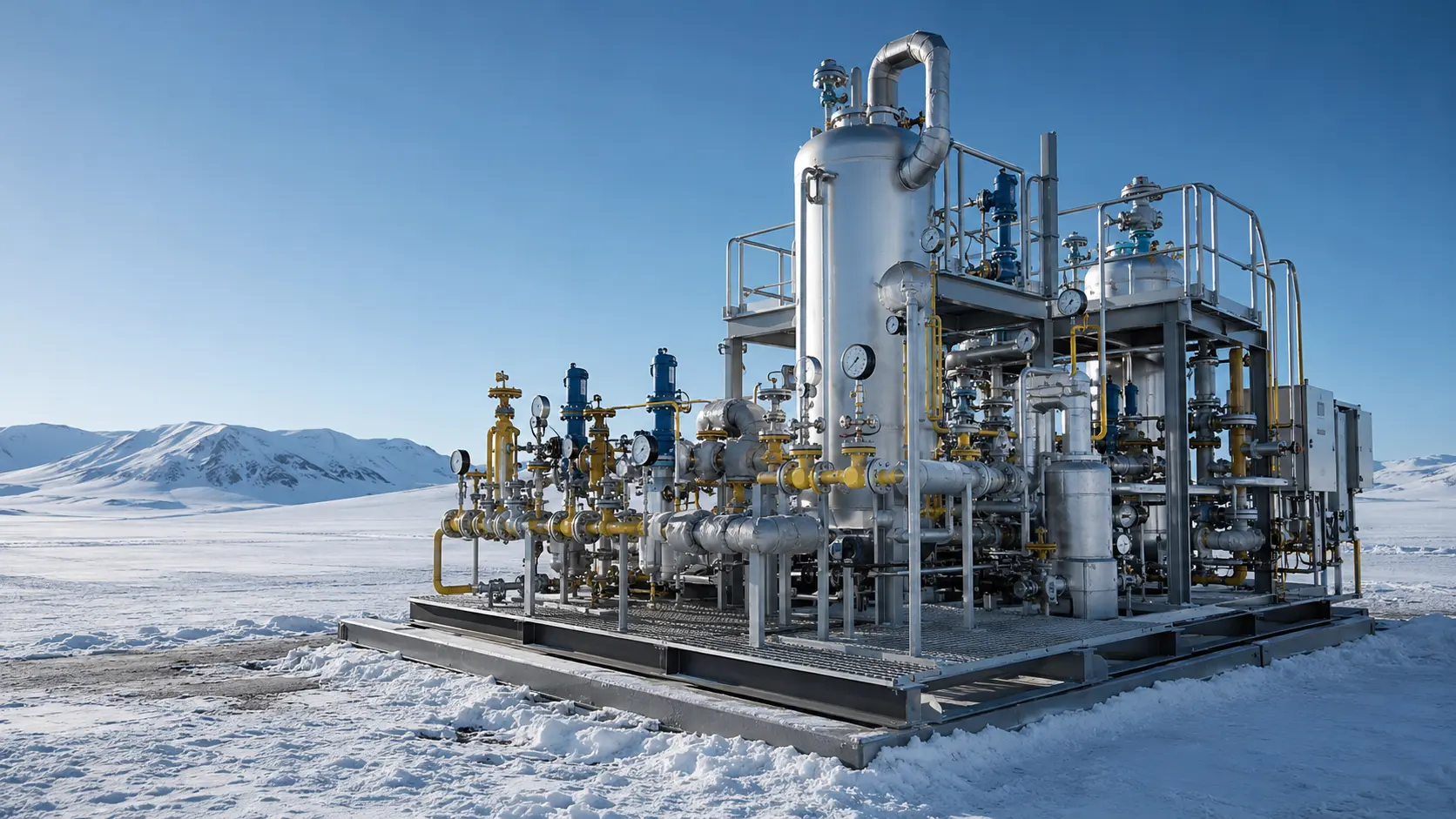
The fuel is cleaned, dried, and conditioned beside the field, creating a consistent input for reliable power generation.
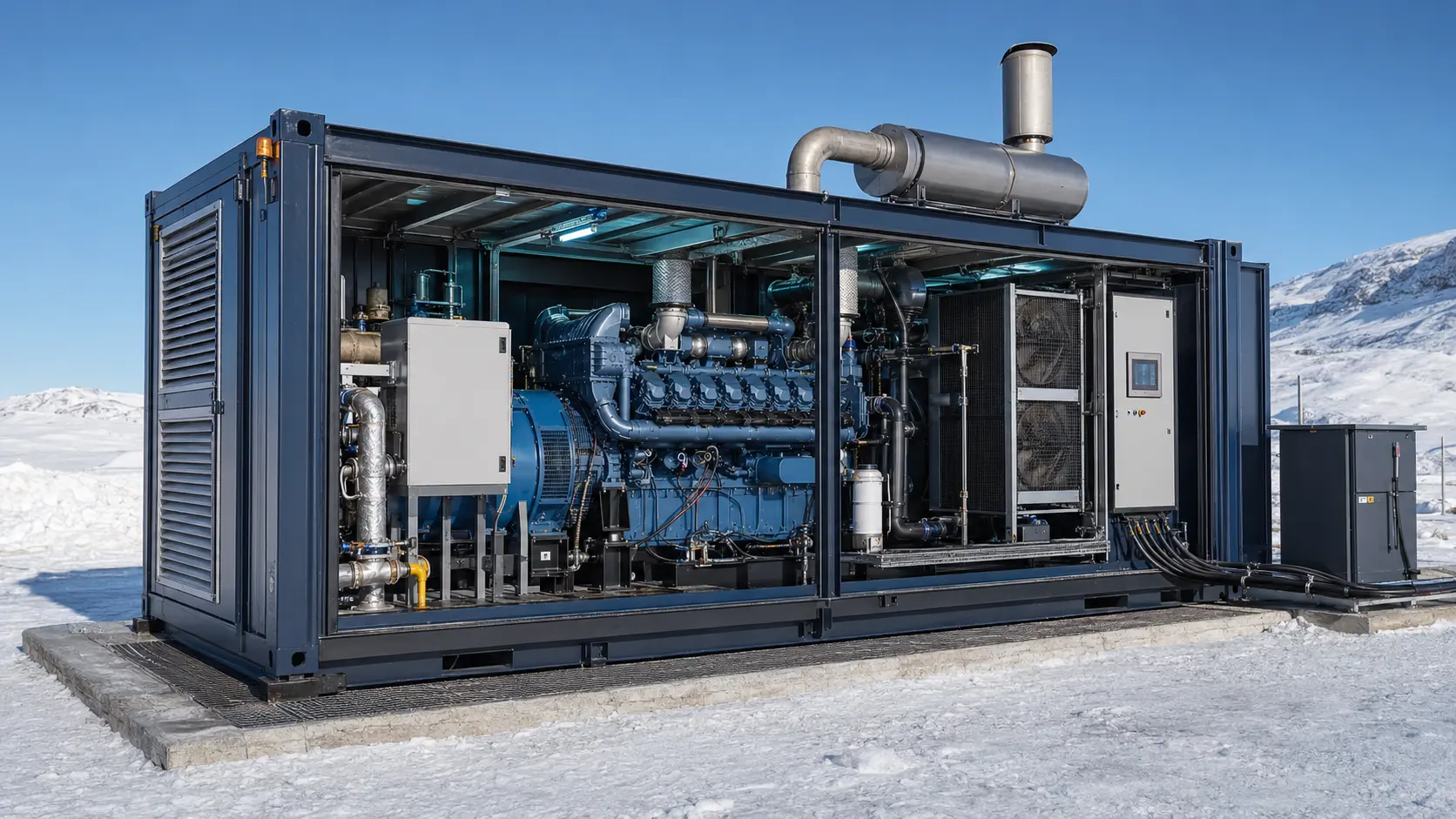
Containerized generators convert conditioned gas into dispatchable electricity, independent of long-distance transmission infrastructure.
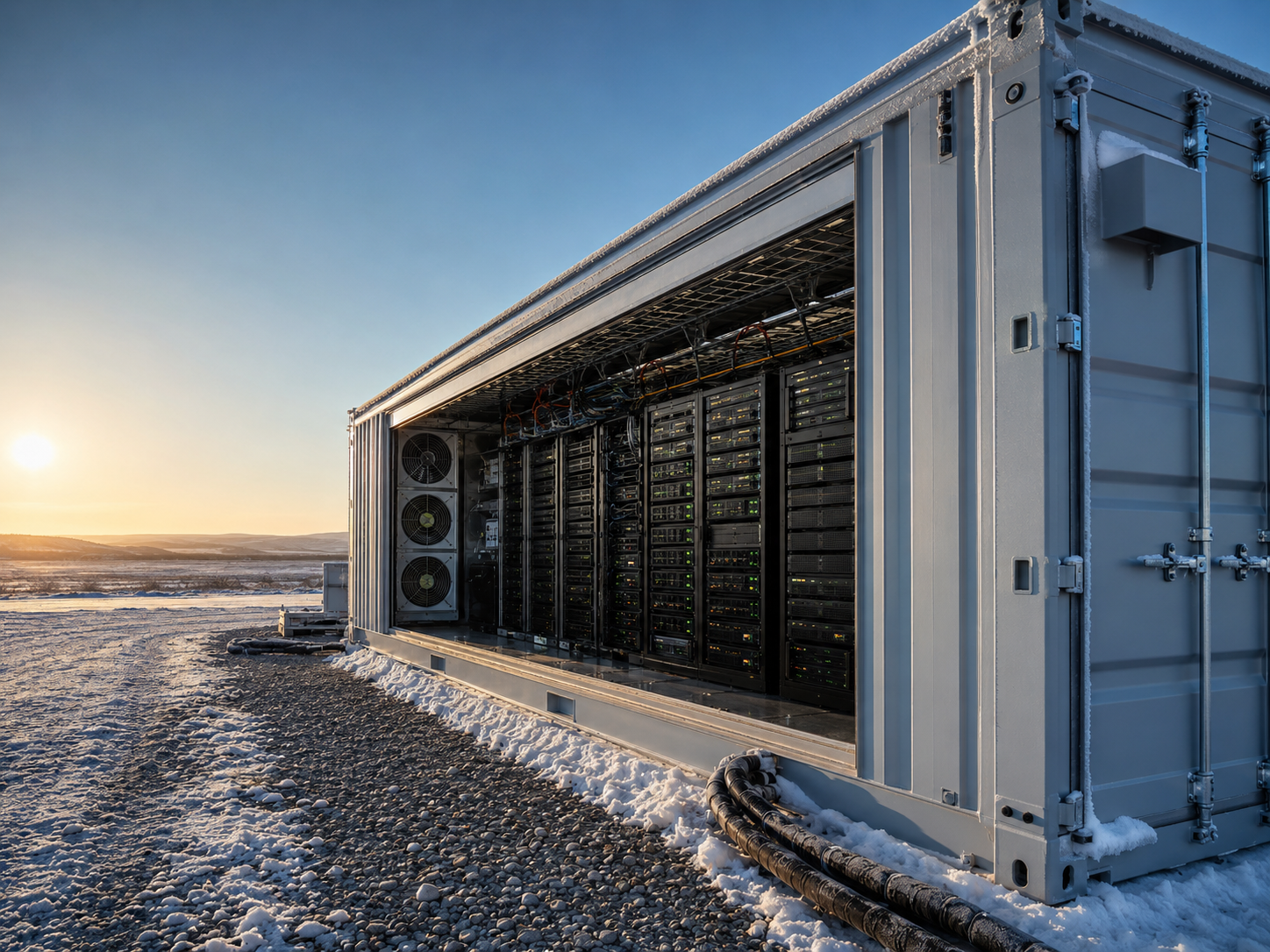
High-density compute containers are deployed in repeatable blocks, engineered for remote sub-zero operation and rapid capacity expansion.

The platform is designed to begin with blockchain workloads while preserving a future path to AI inference and high-performance computing.
Why the advantage is permanent
It is not equipment alone. It is operating environment and gas access. Sub-zero ambient cooling and production-cost stranded gas cannot be replicated by a hyperscale operator, regardless of capital or intent.
Structural advantage · 01
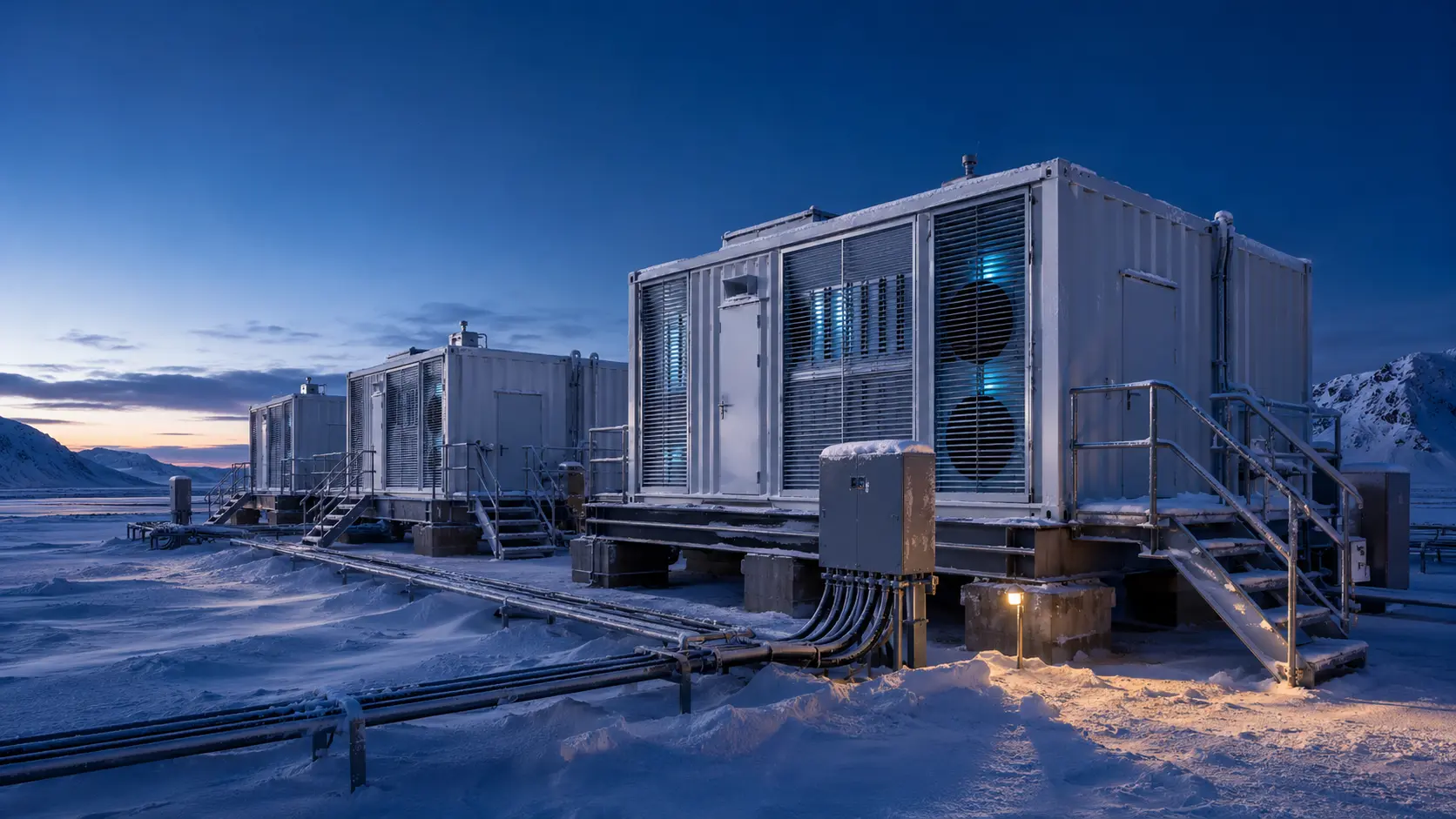
The planned platform draws on stranded natural gas at a remote cold-climate site, where limited access to conventional infrastructure can constrain traditional monetization.
By siting generation at the energy source, ArctIQ avoids transmission constraints and converts a local resource into productive compute capacity.
Containerized natural-gas generation converts fuel into reliable, dispatchable electricity at the field. The power plant is modular, so capacity can be deployed in stages and maintained without taking the full system offline.
Generation, switchgear, routing, and compute sit inside one integrated operating system. No long-distance grid connection is required.
Cooling is a material component of facility energy use. ArctIQ's internal engineering case estimates an 8–12% cooling share in the planned cold-climate design, compared with 20–30% in temperate conditions and 30–50% in hot climates.
That cooling comparison is a design estimate, not a measured operating result. Full-site Power Usage Effectiveness will be reported after commissioning, once all facility loads can be metered over a representative period.
Internal engineering comparison. The ArctIQ range is a pre-commissioning design estimate and will vary with workload, equipment and weather.
Lower is better. The comparison places ArctIQ's engineering target beside reported operating results; it does not present the target as achieved performance. Cooling share alone is not PUE: the metric also captures power distribution, controls, lighting and other facility loads. ArctIQ will publish measured full-site PUE after commissioning and a representative operating period.
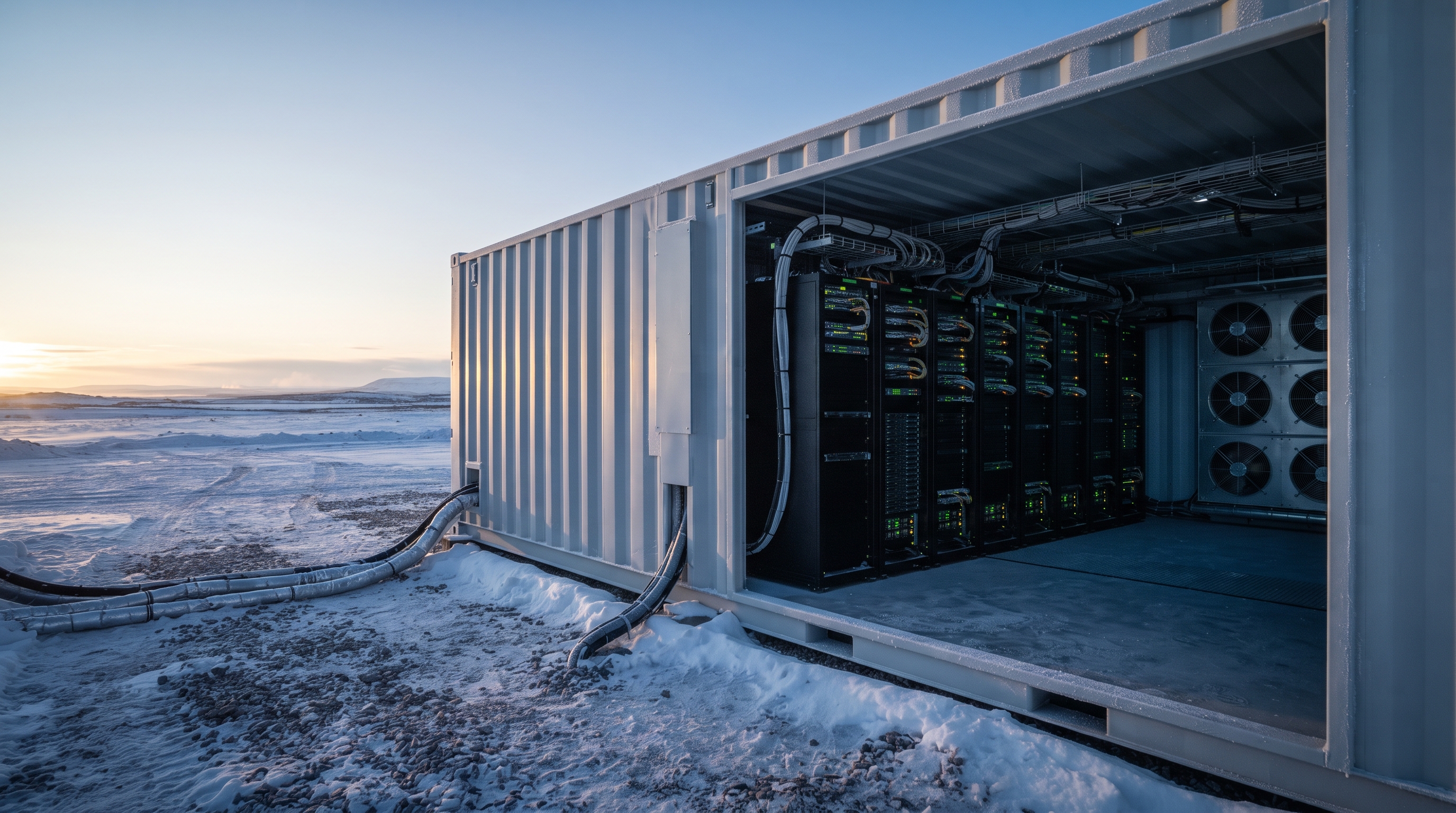
The planned data-center design uses five rack zones across major compute categories, from air-cooled ASIC mining to high-density, liquid-cooled AI and HPC clusters.
Capacity can be rebalanced between zones as market conditions evolve. That flexibility protects utilization and prevents the infrastructure from becoming captive to one workload.
Full stack · Technical overview
One connected platform brings together stranded gas, on-site power, and scalable compute infrastructure.
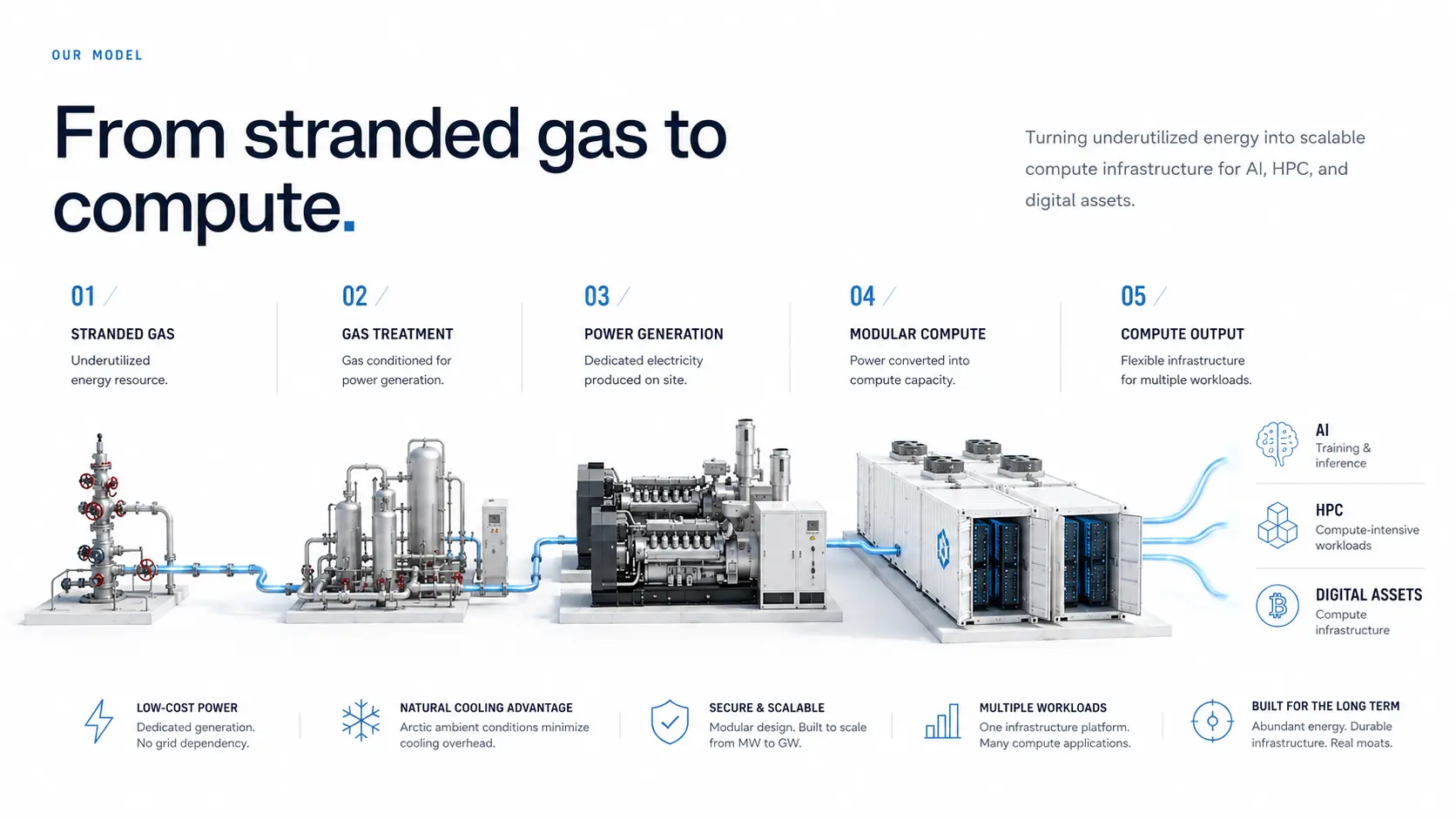
Swipe to explore the full model →
Operations
Centralized monitoring, automation, and remote workflows help keep operating overhead independent of infrastructure growth.
Centralized telemetry, monitoring, and escalation workflows are designed to support continuous remote oversight.
Automation and remote support are intended to limit the need for operational overhead to rise in direct proportion to capacity.
Contractor, service, and maintenance planning is structured for a remote cold-climate operating environment.
Detailed operating-site materials are available to qualified investors under NDA.
Platform scope
The infrastructure is not designed around a single workload. The initial Bitcoin configuration preserves a future path to a broader compute mix, subject to workload-specific upgrades and commercial requirements.
Operations
Real-time dashboards track hardware, power usage, and environmental conditions across deployed units.
Centralized control systems minimize on-site headcount and prevent overhead from scaling linearly.
Built for reliable operation in extreme, isolated environments. Remote-first by design.
Automated escalation protocols with remote response capability protect system continuity.
Investor access